History
How Curiosity Shaped Neuroscience
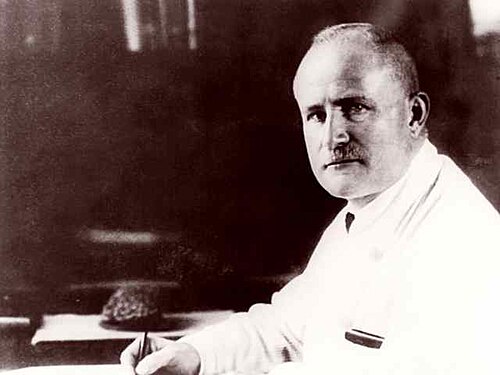
How was the electroencephalogram (EEG) invented? It was invented by Hans Berger in 1924, who, driven by curiosity and a near-death experience, became the first to record the brain’s electrical activity and uncover its hidden rhythms.
A Life-Changing Moment
In 1892, young soldier Hans Berger fell off his horse and landed in front of a moving cannon. He narrowly escaped death. That evening, he received a telegram: his sister, hundreds of kilometers away, experienced sudden, intense fear at the exact moment of his accident. Berger became convinced that his fear had somehow reached her, possibly through psychic telepathy. This moment sparked a lifelong obsession: discovering the physical energy through which the brain transmits thoughts.
Years of Frustration and Experimentation
Before discovering EEG, Berger spent nearly a decade exploring the brain’s mysteries (1901–1910). He first tried measuring blood flow to track mental activity, but the signals were too weak to be meaningful. Next, he attempted to measure heat directly from the brain using a thermometer, hoping that mental effort would produce detectable changes. The results were erratic and inconsistent. Electrical signals seemed the most promising, but the early machines were noisy and unreliable. Each failure was discouraging, yet Berger persisted, driven by curiosity and determination.
Turning Point: Provoking the Brain
By 1912, Berger became a senior physician. World War I put his lab work on hold, but he continued developing bold postwar plans to uncover “psychic energy.” When he finally returned to the lab, he changed tactics: instead of passively observing the brain, he began actively stimulating it to measure how different regions consumed energy. Early trials were limited by the difficulty of finding participants, so Berger turned to his own son for dozens of EEG sessions. This approach allowed him to identify clear brainwave patterns in healthy subjects.
Breakthrough: The First Reliable EEG
On July 6, 1924, after 22 years of persistence, Hans Berger captured the first reliable electrical activity of the brain. These signals, later called alpha waves or “Berger waves”, were validated by Cambridge physiologist Lord Adrian. While Berger faced skepticism from contemporaries, his method became a cornerstone of neurology and brain research.
Legacy and Recognition
Berger’s dream of proving telepathy never materialized, yet his work fundamentally transformed neuroscience. EEG became an essential clinical tool for monitoring brain activity. Despite struggling with physical and mental health later in life and tragically committing suicide in 1941, Berger’s discoveries continue to influence modern research. His story demonstrates how bold experimentation and persistence can overcome doubt and technical limitations.
Inspiration for Modern Innovation
For our startup, focused on remote EEG monitoring, Berger’s story is a reminder of the power of curiosity:
Think boldly: Berger challenged conventions and designed innovative methods.
Persist through failure: Two decades of trial and error led to groundbreaking results.
Impact lives: His discoveries laid the foundation for accessible brainwave monitoring today.