History
Your Brain Works Faster Than You Think
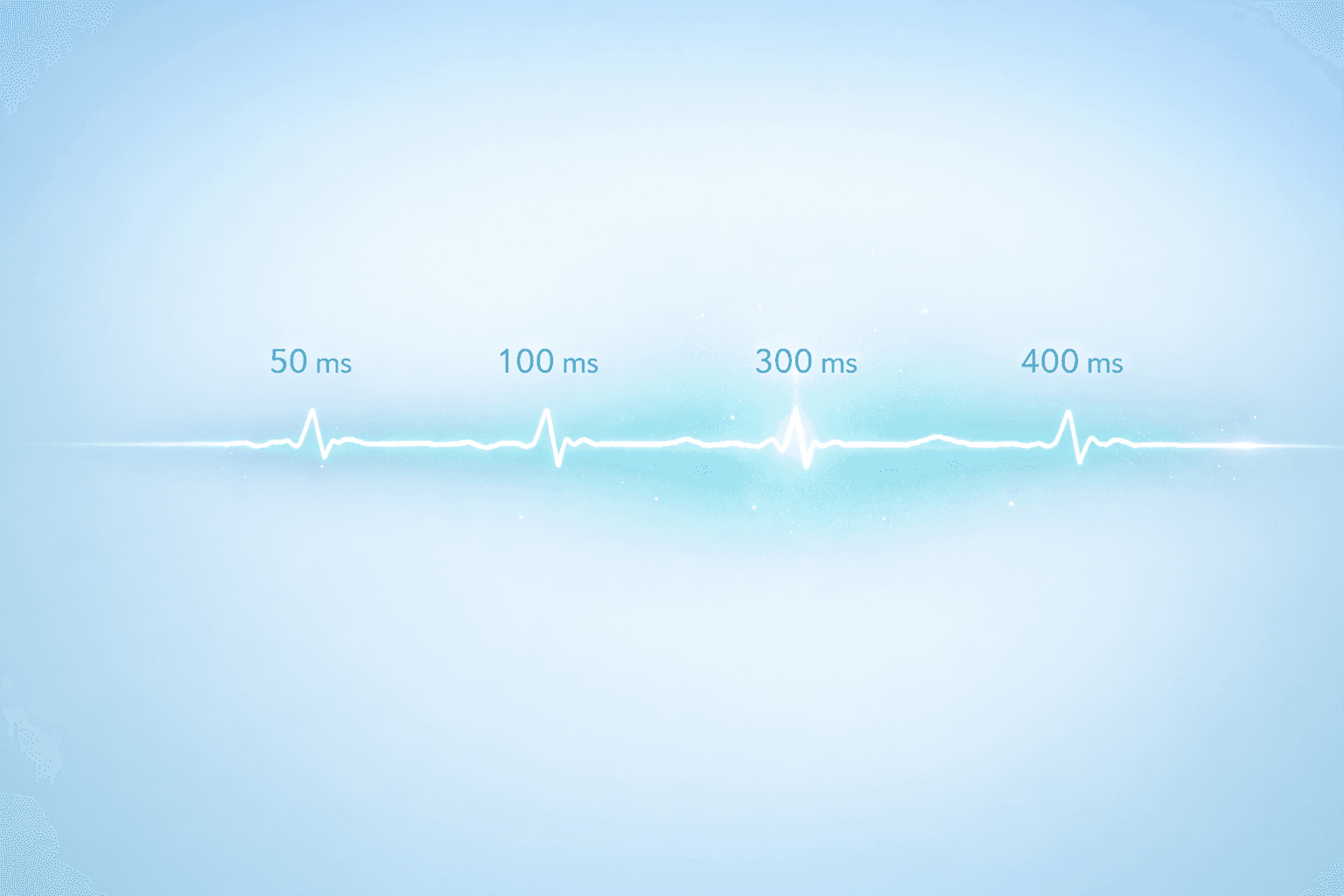
How fast can the brain process sound, and how do we measure it? Easy: The brain processes sound extremely quickly, often in less than a second. We measure this using Event-Related Potentials (ERP) research. ERP relies on EEG, a technique that records electrical activity from the scalp with millisecond precision. This allows scientists to pinpoint exactly when the brain detects a sound, notices something unexpected, or extracts meaning.
Your brain is in complete control and acts faster than your body ever could. Can your body do anything in less than half a second? Probably not. Your brain can. Read below how your brain does such an impressive job.
What Are Event Related Potentials (ERPs)?
ERPs are tiny changes in brain activity triggered by a specific event, like hearing a word or a tone.
By repeating the same sound many times and aligning the brain recordings to the exact moment it occurs, random background activity cancels out.
What remains is the brain’s reliable response, measured with millisecond accuracy.
ERP research shows how your brain can turn sound into meaning in less than 400 milliseconds.
A Journey Through 400 Milliseconds
50 Milliseconds
Imagine hearing a beep or someone calling your name. Around 50 milliseconds, a small positive wave called P50 appears. You are not yet aware of the sound, but your brain is already filtering it. It decides what deserves attention and what can fade into the background.
100 to 200 Milliseconds
By 100 milliseconds, the N100 peaks, quickly followed by the P200. Your brain has noticed a new sound. It is already boosting the signal of sounds that need your attention without conscious effort.
150 to 250 Milliseconds
Play a series of identical tones, beep beep beep. Then add a slightly different one. Even if you are not paying attention, a distinct negative wave appears called Mismatch Negativity. Your brain predicted the pattern and reacts automatically when reality breaks the expectation.
300 Milliseconds
The P3b appears about 300 milliseconds after a meaningful stimulus. Attention becomes intentional. Your brain recognizes relevance, allocates resources, and prepares a response. This is the moment of engagement when your brain decides this matters.
400 Milliseconds
The N400 shows up when a word does not match what your brain predicted. For example, I take my coffee with cream and shoes. For a brief moment everything sounds normal, then your brain immediately registers the mismatch. In less than half a second, sound becomes language, language becomes meaning, and your brain has already noticed the error before you consciously think what.
Why This Is Incredible
In 400 milliseconds, you cannot send a text. You cannot take a full breath. You cannot even blink. Yet your brain can detect a sound, compare it to memory, evaluate its importance, check it against expectation, and extract meaning.
ERP research makes this invisible process visible. It shows that the brain’s electricity is structured, timed, and logical, not random noise.
How This Helps You
Next time someone calls your name, your phone buzzes, or you hear a surprising word, your brain has already processed the event and your response is already in motion before conscious awareness.
ERP Wave | Timing (ms) | Function |
P50 | 50 | Early detection of sound, filtering background |
N100 | 100 | Noticing a new sound, initial attention |
P200 | 150 | Boosting relevant sounds, sharpening attention |
Mismatch Negativity | 150-250 | Detecting deviations from expected patterns |
P3b | 300 | Intentional attention, resource allocation |
N400 | 400 | Language and meaning, detecting mismatched words |